
Al Sharqiyah North Governorate
Al Sharqiyah North Governorate lies on the interior side of the Eastern Hajar Mountains, and it borders Muscat Governorate to the north, Al Dakhiliyah Governorate to the west, and Al-Sharqiyah South Governorate to the east and south.
The governorate consists of seven wilayats: Ibra, Al Mudhaibi, Bidiyah, Al Qabil, Wadi Bani Khalid, Dima Wa Tayeen, and Sinaw, with Ibra as its administrative center. According to the National Center for Statistics and Information, the population of the governorate is 320,504.
Al Sharqiyah North Governorate has benefited from many development projects across various sectors, including healthcare, education, tourism, roads, electricity, and water, among others.
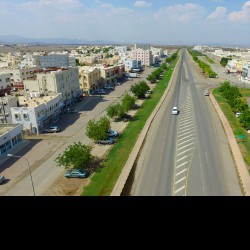
The Wilayat of Ibra
It is one of the wilayats of Al Sharqiyah North Governorate. It is bordered to the north and east by the Wilayat of Al Mudhaibi, to the south by the Wilayat of Al Qabil, and to the west by the Wilayat of Dima Wa al Tayiyyin. It lies approximately 180 km from the capital, Muscat. Ibra serves as the administrative centre of Al Sharqiyah North Governorate and uses the Aqaba Mosque as its emblem. Traditional crafts and industries in the Wilayat of Ibra are diverse. These include weaving (particularly garment making), wool spinning, Khanjar (dagger) making, and women’s jewellery crafting, as well as the production of mats, ropes, baskets, and date bags from palm fronds. Other notable crafts include leather tanning, shoemaking, date and lemon drying, and the use of various palm-derived products.
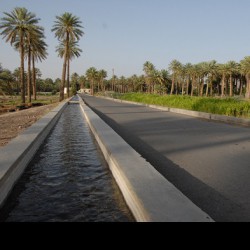
The Wilayat of Al Mudhaibi
It is one of the wilayats of Al Sharqiyah North Governorate. It is bordered to the north by the wilayats of Bidbid, Samail, Ibra, and Al Qabil; to the south by the Wilayat of Mahout; and to the east by the wilayats of Bidiyah, Ja’alan Bani Bu Hasan, and Ja’alan Bani Bu Ali. To the west, it is bordered by the wilayats of Izki and Adam. The wilayat has adopted the gazelle as its emblem. The Wilayat is known for its variety of traditional crafts and industries, with agriculture being the primary activity practiced by the population. Among the most common crops are date palms, lemons, alfalfa, and vegetables. Other notable crafts include grazing and camel breeding, spinning and weaving, crafting with palm leaves, producing date baskets and agricultural tools—particularly traditional farming implements—as well as Omani sweets manufacturing and rug making.
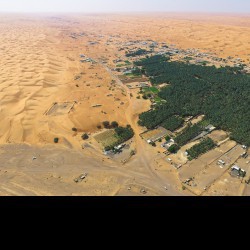
The Wilayat of Bidiyah
The Wilayat of Bidiyah stands out as a prominent local and international destination within Al Sharqiyah North Governorate, thanks to its rich natural features and distinctive environment. With its picturesque oasis and fine golden sands, Bidiyah serves as a gateway for foreign tourists and visitors heading to the renowned Sharqiyah Sands. Like other wilayats in the Sultanate of Oman, Bidiyah has witnessed remarkable development and progress during the country’s modern renaissance. This growth has extended to every oasis, region, and village within this beautiful wilayat, where the spirit of Omani heritage and history harmoniously blends with contemporary life, offering a unique and rare expression of authenticity and tradition. What distinguishes Bidiyah most from other Omani wilayats is the deep-rooted connection its people maintain with their traditional heritage and their strong commitment to preserving cultural identity despite ongoing modernisation. This is clearly reflected in the continued practice of traditional arts and customs, especially during religious and national celebrations. These include horse races, Razhah, Al-Aazi, Hambal Al Boush, Al-Taghroud, and other Bedouin folk arts. The wilayat also preserves a number of traditional industries and handicrafts that rely on natural raw materials drawn from the surrounding desert environment. These crafts not only reflect the cultural richness of the region but have also encouraged young men and women to invest in small and medium-sized enterprises, marketing their products as tourist souvenirs. Among the most important traditional industries are gold and silver crafting (including jewellery, daggers, and swords), khousiyat (date-collecting baskets and storage bags), leather tanning (for dagger belts and sword sheaths), and palm-leaf weaving (used to make robes, mats, and other items).
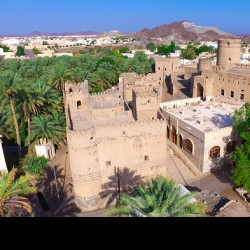
The Wilayat of Al Qabil
It is one of the wilayats of Al Sharqiyah North Governorate. It is bordered to the north by the Wilayat of Ibra, to the south by the Wilayat of Bidiyah, and to the west by the Wilayat of Al Mudhaibi. The wilayat has adopted the saddled horse as its emblem. Al Qabil is home to approximately 69 historical landmarks, the most prominent of which are Al Qabil Fort and Al Mudhairib Fort. It is also known for having around 50 falajs, the most important being those of Al Mudhairib, Al Qabil, Al Draiz, and Al Naba. The wilayat is further distinguished by its picturesque villages nestled among golden sand dunes, including Saqa, Al Aqidah, Al Khurais, and Al Jawfa. In addition, several notable springs are found in the area, such as Ayn Marzouk—famous for its mineral waters—Ayn Wadi Baraka, and Ayn Al Washal. These aflaj, springs, and dune villages serve as key tourist attractions in the Wilayat of Al Qabil. As a symbol of Oman’s ancient history, the Wilayat of Al Qabil stands out for its rich heritage. Its numerous forts, castles, and towers are lasting testaments to its historical significance. Strategically located in the eastern part of Al Sharqiyah North Governorate, the wilayat lies along the main road connecting the cities of Muscat and Sur. It is bordered by the Wilayat of Wadi Bani Khalid to the east, Bidiyah to the south, Ibra to the north, Wadi Dima Wa al Tayyin to the northeast, and Al Mudhaibi to the west. The wilayat features a diverse terrain, combining sand dunes, towering mountains, and low-lying valleys (wadis). It is also renowned for its ancient architectural heritage, including centuries-old towers that still stand firm—resilient against time, erosion, and shifting topography—preserving their grandeur and historical legacy.
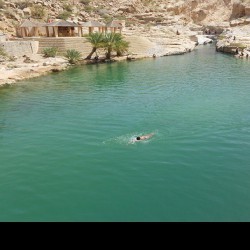
The Wilayat of Wadi Bani Khalid
It is one of the wilayats of Al Sharqiyah North Governorate. It is bordered to the north by the Wilayat of Dima wa al Tayiyin, to the south by the Wilayat of Al Kamil Wa Al Wafi, to the east by the Wilayat of Sur, and to the west by the Wilayats of Bidiyah and Al Qabil. The wilayat has adopted Wadi Bani Khalid as its emblem. The wilayat is renowned for its archaeological and historical landmarks. Among its notable forts is Al-Mawalik Fort in the village of Al-Lawaina, which dates back to the 4th century AH. It is the largest fort in the wilayat and once served as the administrative centre for the governor (wali) and the local judge. Other important forts include Al-Adafin Fort in the village of Qaswa and Al-Ruzaiqiyeen Fort in Al-Hosn village. There are also nine towers spread across the wilayat. In addition, the region is rich in natural attractions, particularly its springs, which include Ayn Du Al-Lathb, Al-Kabira, Kanara, Al-Muntajar, Al-Halqa, Jabyat Al-Khamrah, Al-Hawiya, Al-Makhda, Al-Hajir, Al-Athnain, and Ghalala. The wilayat is also known for its network of aflaj, with 56 falajs recorded. The most prominent among them are Al-Haili, Al-Farda, Abu Bara, Al-Sarooj, Al-Harbi, Al-Kabeer, and Abu Khawlan.
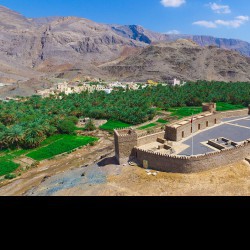
The Wilayat of Dima Wa al Tayiyyin
It is one of the wilayats of Al Sharqiyah North Governorate, located between the eastern Hajar Mountains. It is bordered to the north by the Wilayat of Qurayat, to the south by the Wilayats of Ibra and Bidiyah, to the east by the Wilayat of Al Qabil, and to the west by the Wilayats of Al Mudhaibi and Bidbid. It lies approximately 170 km from the capital, Muscat, and has adopted the “naghal” palm tree as its emblem. The Wilayat of Dima Wa al tayiyin is home to several archaeological landmarks, including forts, towers, and ancient mosques. Notable among them are three forts, located in the villages of Al-Hammam, Khabbah, and Al Hosn. The wilayat also features 87 towers scattered across its landscape, in addition to an old mosque that has recently been restored. Natural features such as springs, falajs, and caves serve as prominent tourist attractions in the wilayat. Among the most important springs are Ayn Falaj Al Murr, Ayn Falaj Al Sokhna, Ayn Al Misfah, and Ayn Al Sokhna. As for the aflaj, key examples include Al Aqdani, Al Qaryah, Al Luwaili, Al-Ain, Al Taht, and Falaj Qar. In addition, the ghiliyya-type aflaj are widespread throughout the wilayat, with an estimated 200 aflaj in total. One of the notable natural features is Ghar Abu Habban, a well-known cave. The wilayat is also home to Wadi Bani Dayqah, one of the most fertile and water-rich valleys (wadis) in the region, and a popular destination for visitors.


Traditional Crafts
In spite of the development and progress achieved by Omani society in all aspects of life, the preservation of the Omani heritage is a fundamental pillar of the modern state and a distinctive feature of the Omani society. Heritage is an essential element in the formation of national identity. Despite the tremendous development of tools and means of production. Omani crafts include: Ship (Dhow) Building Oman's connection with the sea stretches back many centuries when Omani sailors using mast and sail, pioneered sea routes to the cities of the ancient world. Favorable factors were Oman's position at the crossroads of shipping routes which linked the Arabian Gulf to India, the Red Sea and East Africa and her knowledge of shipbuilding. Oman became the first non-European country to extend its influence to Africa where it remained for hundreds of years, due mainly to her ships/dhows. Oman was an important maritime and political power who established relations with China, Great Britain, France, the Netherlands and the United States of America. Throughout its long history, Oman's navy has played a key role in the country's economic success, both in providing the instrument for internal and external trade and in underpinning fishing and pearling activities. The Omani warship "The Sultana" which anchored in New York harbour in 1840, bearing gifts from Sultan Said bin Sultan to the American President, was a symbol of the greatness of the Omani fleet at that time. In Oman two techniques are used in shipbuilding. In the first, timbers are laid side-by-side and pierced at intervals with a fine hand drill. The timbers are then bound together through these holes by means of rope made of coconut fibre and the holes covered with a mixture of fibre or raw cotton soaked in fish, coconut or sesame oil. Arab geographers such as Al Idrissi and Ibn Jubair believed that boats bound with fibres and with flat hulls were safer than those fitted together with rigid iron nails because if they ran onto rocks or came into contact with another hull, they were more flexible. In the second method, nails are used and in essence this is the same technique as used in other countries of the Arabian Gulf and Red Sea. The main type of wood used for the hull and keel is teak which is imported from India. The ribs are made from locally available woods such as qart, sidr and sarar. The tools used in a ship's construction are simple and basic such as the hammer, saw, awl, bow drill, chisel, plane and calking iron. The principal shipbuilding yards in Oman were Sur, Mutrah and Shinas. Omani ships, which can last for 60-100 years, are distinguished by their variety of types although some are no longer made. The largest type was the ocean-going cargo vessel, the baghlah with a length of 135 feet and a load capacity of 150-400 tonnes which could be distinguished by its high poop deck and quarter galleries, its transom stern being pierced by five window apertures and often elaborately carved. The ghanjail was very similar to the baghlah, and is considered by many Omanis to be the most beautiful of the large dhows.The sambuuq used to be one of the most commonly seen Arab vessels: its distinguishing features are the low, curved, scimitar-shaped stem piece and high square stern which lacks a quarter gallery. The word sambuaq used to denote the sewn boats of the Dhofari coast, and may therefore be a term of great antiquity. The government is keen to encourage the maritime tourist industry, in restoring old ships, increasing the use of large vessels/dhows for sea fishing, and also the building of small models of Omani ships for decorative purposes and for i participating in exhibitions. HALWA Omani halwa (sweet) is famous at home and abroad as a symbol of traditional Omani hospitality. It is usually served in Omani homes before drinking Arabic coffee. The main ingredients which go into the making of halwa are: starch, eggs, sugar, water, ghee, saffron, cardamom, nuts and rose water from the Jebel al Akdhar. The ingredients are mixed, in proportions and quantities known only to the skilled halwamaker, and cooked in a mirjnl (large cooking pot used especially for halwa) for a time of not less than 2 hours. The cooking can be done over a gas or electric stove, but the preferred method is over a wood fire made up of snmr wood, known for its durability, smoke and odourfree properties. After cooking, the halwa can be preserved for more than four months without losing its quality, and without the need for refrigeration or preserving agents. Halwa is usually served in a dist, a large earthenware bowl, which can vary in size and composition according to demand or type of occasion. The list can also be made of metal or plastic. Halwa is invariably served at times of joy or sorrow and, on religious occasions and festivals. It graces the tables of every Omani home. Palm leave products The Palm leave products depends on palm trees. There are Al Khaws (palm leaves), the Zawr (palm branches stripped of their leaves), the palm trunk and the fibre. For example, mats(rugs) are made of the two plants called Al Ghadf and Al Rusul which grow on the valley banks where there is an abundance of water. Governorate of Musandamis renowned for its palm leaf industries, such as utensils (Al Surood and Al Makba) which are made from palm leaves. Al Surood is a mat-shaped tray known as Sama, used with food to protect it from insects, while Al Makba fulfils the same purpose. Daggers and Swords A normal or hooked dagger is the most important component of the Omani dress. Omanis are keen to acquire daggers and appear wearing them at official events, national celebrations and weddings. Due to the succession of this social custom from one generation to another, the dagger-making industry has survived the passage of time, albeit with modern improvements. The Omani dagger is an authentic heritage the present generation is keen to pass on to their children. The dagger is also a symbol of manhood and pride among Omani men, who wear it on their leather belts over the dishdashah (long outer garment). Its front section is made of small connected silver pieces, or it may be elegantly embroidered with silver or gold threads. A dagger’s price is determined by the raw material it is made of, usually iron, silver or gold. Although silver daggers are the most common, especially for making the dagger handle, the blade case too determines a dagger’s price. There is the giraffe case, which is the most expensive because it has been banned, and cases made of buffalo skin, sandalwood, and the bitter orange tree. Silver wares The silver industry occupies a key place in the history of Oman. Omani silver jewellery is characterised by a rich sense of the aesthetic and reflects the unique taste of the country’s authentic art, deeply rooted in its history. Silver in Omani society is reflective of its rich social and religious symbols. The Omani dress, whether that of women or men, is never complete without silver jewellery that adds to its beauty, especially apparent in the Omani khanjar (dagger). The Pottery The art of pottery-making is an inherent and distinct testimony to the world’s civilisations as it reflects the extent of their development and advancement. Though pottery-making is one of the simplest forms of art because of its primitive nature, it is in fact, one of the most difficult trades because it involves a form of art. Pottery-making in Oman is considered an ancient industry. The reason it has attracted much interest can be attributed to the multitude of its uses in Omanis’ daily lives. Bahla in A'Dhahirah Governorate is the most famous town for pottery-making in Oman. Pottery is of many kinds and shapes, and its uses and manufacturing materials vary. The pots known as jihal are used for keeping water, the red pots with a thick layer known as khuroos are used for keeping water and dates, the small ones are for keeping honey and grease and the pots known as brams are used as cooking utensils. Pottery is also made as coffee pots and thermoses. Clay is the main component of Pottery and is widely available in Bahla in A'Dhahirah Governorate, where the soil is rich in clay.


