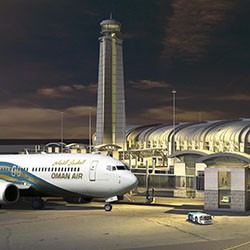
北バティナ県
北バーティナ県は、海と山の間に広がる沿岸地帯であり、美しい自然環境と経済的重要性を併せ持っています。スハール、シナス、リワ、サハム、アル・ハブーラ、アル・スワイクの6つのウィラーヤから構成され、スハールが行政中心地です。
オマーン海の南岸に沿った戦略的な位置にあるため、歴史的にオマーンと他国を結ぶ海上貿易の玄関口として機能してきました。
この地域は、国内最大の農業地帯(バーティナ平原)を有しており、多様な鉱物資源にも恵まれ、産業発展の拠点となっています。スハール工業港は、肥料、石油化学、アルミニウム、鉄鋼などの大型産業プロジェクトを誘致しており、スハール自由貿易地域やスハール空港も経済発展を支えています。バーティナ高速道路は、オマーンの戦略的インフラの一つとされています。人口は925,762人です。
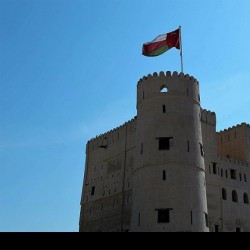
The Wilayat of Liwa
It is one of the wilayats of the Al-Batinah North Governorate. It overlooks the coast of the Sea of Oman on the east, and it is bordered on the north by the Wilayat of Shinas, on the south by the Wilayat of Suhar, and on the west by the Wilayat of Mahadhah in Al Buraimi Governorate. It is 277 km away from the city of Muscat. It also has a number of castles, forts and towers, the most important of which is the Liwa Fort, which consists of three main towers cantered on the outskirts of the wall surrounding this castle. There is also the Fazah Fort, which is approximately one hundred meters high. As for the Awlad Arab fort, it is made of white clay and is located on the beachfront in the area of Harmoul. There are a number of constellations in the wilayat and on its mountain peaks. There are also a number of ancient mosques, the most important of which is the Imam Al-Rabee bin Habib Mosque, which is one of the Omani scholars who grew up in the village of Ghadfan in the state. Besides, there are some tourist attractions that are represented by a number of springs, falajs and caves, such as Ain Al-Azm, which is adjacent to the creek and on which the Crimea trees are scattered on its side. In Jabal Abu Kahf there are the most famous caves in the Wilayat of Liwa, and there are about twenty falajs.
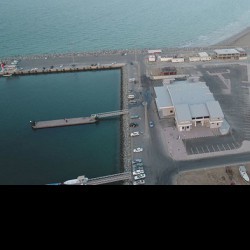
The Wilayat of Al Suwaiq
It has 20 fences and four towers in addition to a number of towers and forts that spread in its various villages, the most important of which are Al-Tharmad, Al-Hilal, Al-Maghabshah and Al-Burshaid forts. There are also about 31 falajs in the wilayat, the most important of which are the falajs of Baldat Mashayq, Mabrah, Al-Heilain, along with four springs, one of which is in Dhiyan Al-Busaid, and the rest in Al-Hajur area in Wadi al-Jahawir regions, which is characterized by the locations of tree-gathering sites in the form natural parks, as well as the running water in the same valley .
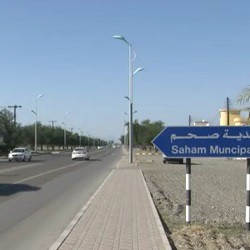
The Wilayat of Saham
It is one of the wilayats of the North Al-Batinah Governorate. It is bordered on the north by the Wilayat of Suhar, on the south by the Wilayat of Al Khaboura, and on the eastern side it overlooks the Sea of Oman and is bordered by the Wilayats of Yanqul and Ibri from the west. It is about 200 km away from the city of Muscat, and the lemon tree is the symbol of the wilayat. There are a large number of falajs that the people are still using to irrigate their crops in many areas, such as Wadi Bani Omar, Al-Fulaij, Al-Rawda, Al-Mahab and Shida. There are also a number of valleys in the wilayat, the most important of which are Wadi Aahin, Al-Mahmum, Al-Sarmi, Shafan and Khor Al-Milh. The most important forts scattered across its sides is the Souq Fort, which was the seat of the governor and the judge of the wilayat, before the establishment of modern buildings to which these government headquarters moved.
The Wilayat of Shinas
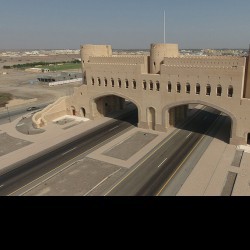
It is one of the wilayats of the Al-Batinah North Governorate. It is bordered to the north by the United Arab Emirates, to the south by the Wilayat of Liwa, to the east by the Sea of Oman, and to the west by the Wilayat of Mahadhah. It is about 284 km away from the capital, Muscat. It has a number of castles, forts and archaeological towers. The most important of its forts is Shinas Fort and of its castles are Ras Al Milh, Khadhrawin, Ajeeb, and Al-Asrar, of which little remains. There are many towers in the Wilayat of Shinas, where it is estimated at about 35 towers, the most important of which are Al-Marir Tower located on the beachfront and Al-Aswad Tower. Among the tourist attractions in the wilayat are the Shinas Park, the dense Crimea bushes on the sea creek, which receive attention and development on the part of the municipality, which makes it a beautiful tourist resort, in addition to Wadi Al-Ghalila and Wadi Al-Aswad.
The Wilayat of Suhar
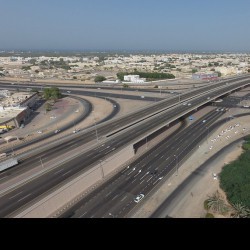
It is one of the wilayats of the Governorate of North Al-Batinah. It is bordered to the north by the Wilayat of Liwa, to the south by the Wilayat of Saham, and on the east side it overlooks the Sea of Oman and bordered to the west by the Wilayat of Al Buraimi. It is about 230 km way from the capital, Muscat. It is the administrative centre of the North Al Batinah Governorate. The Wilayat of Suhar has taken its famous fort as its symbol. Suhar was the capital of Oman before the emergence of Islam. One of its historical monuments was Al-Shamaa Fort, and it was famous for the production and export of copper for a long time. Suhar abounds with many archaeological monuments scattered throughout its branches, but the most prominent one at all is “Suhar Fort”, which is one of the most important castles and forts in all the Batinah region due to its distinguished location and its great role which it played throughout the past centuries. Its construction dates back to the end of the thirteenth century and the beginning of the fourteenth century AD. Archaeological remnants discovered around the castle in (1980) show that its construction dates back to the fourteenth century AD at the southern end of the city and that it was the princes of Hormuz who built it during the era of the kings of Bani Nabhan. The Suhar Fort is characterized by the presence of a tunnel extending ten kilometres to the west, where Al Buraimi Governorate is located. It was being used as a supply line by horses when the fort was in in siege a state of war. Inside the Suhar Fort, there are several wells for drinking water. There are also several towers that were used to monitor, control and defend the city when necessary. On the ground floor there is the tomb of Sayyid Thuwaini bin Said bin Sultan.
The Wilayat of Al Khaboura
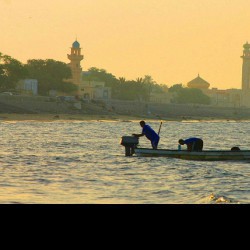
It is one of the Wilayat of the North Al-Batinah Governorate. It overlooks the Sea of Oman from the north, and from the south it connects to the Wilayat of Ibri in the Dhahirah Governorate, and from the east it is bordered by the Wilayat of Suwaiq and to the west by the Wilayats of Saham and Suhar. It is about 171 km away from the city of Muscat. It uses the Omani khanjar (dagger) as its emblem. It has several forts, the most important of which is Abu Said Fort, and a number of forts and towers, the most important of which are Qasbiyyat Al-Busaid, Al-Hijar, Al-Badi’a, Al-Gahiyeen, Al-Aqli, Sur Qutait, Sur Al-Dawahna, Falaj Bani Rabia, and Al-Khabt (Al-Ain). As for the towers, they are Al Khuwairat, Al Rudaydah, Khor Rasal, Qasbiyyat Al Hawasnah and Sur Qutait. In the Wilayat of Al-Khaboura, there are about 150 falajs, the most important of which are Al-Qasf and Nab’an. Caves with no specific names are scattered in its mountains.

Traditional Crafts
In spite of the development and progress achieved by Omani society in all aspects of life, the preservation of the Omani heritage is a fundamental pillar of the modern state and a distinctive feature of the Omani society. Heritage is an essential element in the formation of national identity. Despite the tremendous development of tools and means of production. Omani crafts include: Ship (Dhow) Building Oman's connection with the sea stretches back many centuries when Omani sailors using mast and sail, pioneered sea routes to the cities of the ancient world. Favorable factors were Oman's position at the crossroads of shipping routes which linked the Arabian Gulf to India, the Red Sea and East Africa and her knowledge of shipbuilding. Oman became the first non-European country to extend its influence to Africa where it remained for hundreds of years, due mainly to her ships/dhows. Oman was an important maritime and political power who established relations with China, Great Britain, France, the Netherlands and the United States of America. Throughout its long history, Oman's navy has played a key role in the country's economic success, both in providing the instrument for internal and external trade and in underpinning fishing and pearling activities. The Omani warship "The Sultana" which anchored in New York harbour in 1840, bearing gifts from Sultan Said bin Sultan to the American President, was a symbol of the greatness of the Omani fleet at that time. In Oman two techniques are used in shipbuilding. In the first, timbers are laid side-by-side and pierced at intervals with a fine hand drill. The timbers are then bound together through these holes by means of rope made of coconut fibre and the holes covered with a mixture of fibre or raw cotton soaked in fish, coconut or sesame oil. Arab geographers such as Al Idrissi and Ibn Jubair believed that boats bound with fibres and with flat hulls were safer than those fitted together with rigid iron nails because if they ran onto rocks or came into contact with another hull, they were more flexible. In the second method, nails are used and in essence this is the same technique as used in other countries of the Arabian Gulf and Red Sea. The main type of wood used for the hull and keel is teak which is imported from India. The ribs are made from locally available woods such as qart, sidr and sarar. The tools used in a ship's construction are simple and basic such as the hammer, saw, awl, bow drill, chisel, plane and calking iron. The principal shipbuilding yards in Oman were Sur, Mutrah and Shinas. Omani ships, which can last for 60-100 years, are distinguished by their variety of types although some are no longer made. The largest type was the ocean-going cargo vessel, the baghlah with a length of 135 feet and a load capacity of 150-400 tonnes which could be distinguished by its high poop deck and quarter galleries, its transom stern being pierced by five window apertures and often elaborately carved. The ghanjail was very similar to the baghlah, and is considered by many Omanis to be the most beautiful of the large dhows.The sambuuq used to be one of the most commonly seen Arab vessels: its distinguishing features are the low, curved, scimitar-shaped stem piece and high square stern which lacks a quarter gallery. The word sambuaq used to denote the sewn boats of the Dhofari coast, and may therefore be a term of great antiquity. The government is keen to encourage the maritime tourist industry, in restoring old ships, increasing the use of large vessels/dhows for sea fishing, and also the building of small models of Omani ships for decorative purposes and for i participating in exhibitions. HALWA Omani halwa (sweet) is famous at home and abroad as a symbol of traditional Omani hospitality. It is usually served in Omani homes before drinking Arabic coffee. The main ingredients which go into the making of halwa are: starch, eggs, sugar, water, ghee, saffron, cardamom, nuts and rose water from the Jebel al Akdhar. The ingredients are mixed, in proportions and quantities known only to the skilled halwamaker, and cooked in a mirjnl (large cooking pot used especially for halwa) for a time of not less than 2 hours. The cooking can be done over a gas or electric stove, but the preferred method is over a wood fire made up of snmr wood, known for its durability, smoke and odourfree properties. After cooking, the halwa can be preserved for more than four months without losing its quality, and without the need for refrigeration or preserving agents. Halwa is usually served in a dist, a large earthenware bowl, which can vary in size and composition according to demand or type of occasion. The list can also be made of metal or plastic. Halwa is invariably served at times of joy or sorrow and, on religious occasions and festivals. It graces the tables of every Omani home. Palm leave products The Palm leave products depends on palm trees. There are Al Khaws (palm leaves), the Zawr (palm branches stripped of their leaves), the palm trunk and the fibre. For example, mats(rugs) are made of the two plants called Al Ghadf and Al Rusul which grow on the valley banks where there is an abundance of water. Governorate of Musandamis renowned for its palm leaf industries, such as utensils (Al Surood and Al Makba) which are made from palm leaves. Al Surood is a mat-shaped tray known as Sama, used with food to protect it from insects, while Al Makba fulfils the same purpose. Daggers and Swords A normal or hooked dagger is the most important component of the Omani dress. Omanis are keen to acquire daggers and appear wearing them at official events, national celebrations and weddings. Due to the succession of this social custom from one generation to another, the dagger-making industry has survived the passage of time, albeit with modern improvements. The Omani dagger is an authentic heritage the present generation is keen to pass on to their children. The dagger is also a symbol of manhood and pride among Omani men, who wear it on their leather belts over the dishdashah (long outer garment). Its front section is made of small connected silver pieces, or it may be elegantly embroidered with silver or gold threads. A dagger’s price is determined by the raw material it is made of, usually iron, silver or gold. Although silver daggers are the most common, especially for making the dagger handle, the blade case too determines a dagger’s price. There is the giraffe case, which is the most expensive because it has been banned, and cases made of buffalo skin, sandalwood, and the bitter orange tree. Silver wares The silver industry occupies a key place in the history of Oman. Omani silver jewellery is characterised by a rich sense of the aesthetic and reflects the unique taste of the country’s authentic art, deeply rooted in its history. Silver in Omani society is reflective of its rich social and religious symbols. The Omani dress, whether that of women or men, is never complete without silver jewellery that adds to its beauty, especially apparent in the Omani khanjar (dagger). The Pottery The art of pottery-making is an inherent and distinct testimony to the world’s civilisations as it reflects the extent of their development and advancement. Though pottery-making is one of the simplest forms of art because of its primitive nature, it is in fact, one of the most difficult trades because it involves a form of art. Pottery-making in Oman is considered an ancient industry. The reason it has attracted much interest can be attributed to the multitude of its uses in Omanis’ daily lives. Bahla in A'Dhahirah Governorate is the most famous town for pottery-making in Oman. Pottery is of many kinds and shapes, and its uses and manufacturing materials vary. The pots known as jihal are used for keeping water, the red pots with a thick layer known as khuroos are used for keeping water and dates, the small ones are for keeping honey and grease and the pots known as brams are used as cooking utensils. Pottery is also made as coffee pots and thermoses. Clay is the main component of Pottery and is widely available in Bahla in A'Dhahirah Governorate, where the soil is rich in clay.