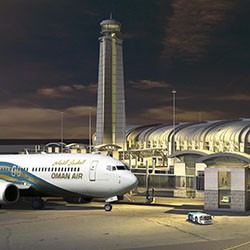
Muscat Governorate
Muscat Governorate is considered the central region of the country politically, economically, and administratively. It is home to Muscat city, the capital of the Sultanate of Oman, the seat of governance, and the hub of the state’s administrative apparatus. Muscat Governorate also serves, as a vital center for economic, tourism, and commercial activities, both locally and in Oman’s relations with other countries.
Muscat Governorate is located on the Sea of Oman, in the southern part of Al Batinah coast. To the east, it borders the Eastern Hajar Mountains and Al Sharqiyah North Governorate. To the west, it borders Al Batinah South Governorate. To the south, it borders Al Dakhiliyah Governorate. It is the most densely populated governorate in Oman, with a population of 1,499,547, according to the National Center for Statistics and Information.
Muscat Governorate has achieved many accomplishments in all areas of modern life, witnessing active developmental progress in various fields. This includes the implementation of a network of vital roads equipped with all necessary systems, technologies, and services linking the governorate’s regions, the enhancement of public facades, landscaping, parks, the establishment of markets, public facilities, the upgrading of residential and commercial neighborhoods, and the planning of some areas. These achievements have positioned it among the most advanced cities, with a level of development and planning that blends a rich history with a bright present and a promising future.
Muscat Governorate includes six administrative wilayats (districts): Muscat, Matrah, Al Amarat, Bausher, Seeb, and Quriyat, with Muscat city being the administrative center of the governorate.
The Muscat Governorate Municipal Council consists of 21 members, including 12 elected members representing the various districts of the governorate.
Wilayat Muscat
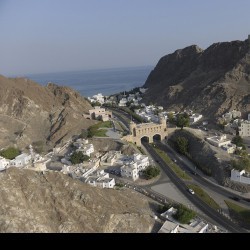
Muscat is one of Oman’s beautiful cities, known for its history, natural geography, and cultural and human achievements. Its history dates back to centuries before the appearance of Islam. It overlooks the Sea of Oman and is surrounded by a series of magnificent mountains. Its villages and mountains extend to the entrance of the village of Qaryat in the southeast. Muscat is known for its historic role and has played a prominent role as a commercial hub since early Islamic times. It was one of the most important commercial centres, thanks to its distinctive strategic location, as well as the two villages of Jalali and Mirani, and many of the ancient houses and towers at the tops of the mountains surrounding the city centre. Muscat is famous for its ancient wall, which has three main entrances known as the doors: the Door of the Cave, the Big Door, and the Small Door. The first is located in the western corner at the bottom of Mirani Castle, and the second at the end of the western side of the wall. It is the entrance that leads to most roads heading to all the suburbs of Muscat and the city of Muttrah. The third, smaller section is located in the middle of the southern side. In the capital Muscat, there is a wonderful blend of ancient cultural heritage and modernity, with old houses, markets, small shops, and narrow roads standing beside modern houses, markets, shops, and wide streets. It preserves its historical and cultural heritage while at the same time embracing the spirit of modernity. It has a network of modern roads and advanced services. Among its cultural features is Al Alam Palace, where His Majesty Sultan Qaboos bin Said met his guests and official visitors to the country. In addition, there is the Council of Oman with its two wings: the State Council and the Shura Council. Al Bustan Palace, one of the largest hotels in Oman, is also located here, along with many state institutions. The villages of Al Bustan, Al Jassah, Al Khiran, and Al Siyafa are beautiful tourist spots with clear blue waters and scenic nature. The watery streams of the Khiran waterways intersect with natural mangrove trees to form a panoramic view that reflects the beauty, growth, and prosperity of the wildlife. There are many historical museums among the tourist attractions in Muscat, such as the National Museum of Oman, the Omani French Museum, Bait Al Zubayr Museum, and the Muscat Gate Museum. There are also several clubs, including Bandar Al Rawda Club and the Oman Diving Club, which is located in Bandar Al Jissah off the beach and offers learning and practice in scuba diving. The Centre for Marine Science and Fisheries presents all information related to fisheries in Oman.
Wilayat Mutrah
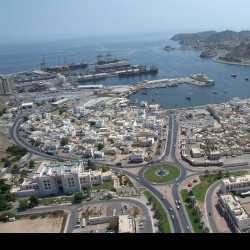
The city of Mutrah has a rich ancient history and holds significant cultural and civilizational value. It was the commercial port of Oman, and its markets were the main source for exporting goods to various local and international markets. Today, the Port of Sultan Qaboos serves as an important tourist gateway to the Sultanate of Oman, attracting large cruise ships from around the world. The old Mutrah Souq is renowned for its unique architectural style and historical elements. It offers a variety of Omani products and handmade items, particularly Omani jewelry made of gold and silver, making it a popular destination for tourists interested in studying the glorious history and civilization of Oman. Today, Mutrah serves as the commercial and economic centre of Oman, with its business district housing many local and international economic institutions and banks, including the Central Bank of Oman, the Muscat Securities Market, the Oman Chamber of Commerce and Industry, and a large number of companies and shopping malls. Mutrah is also known for its castles, walls, ancient towers, and historical museums, such as the Museum of the Ministry of Heritage and Tourism, the Museum of the Armed Forces at the Citadel of Bait Al Falaj, Bait Al Baranda Museum, and the Museum of Omani Currency at the Central Bank of Oman.
Wilayat Bausher
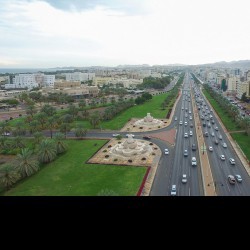
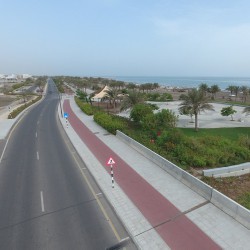
Bausher is home to a number of important historic landmarks, including Al Beit Al Kabir (Grand House), the Citadel of Fath, and the ancient ruins of a once-thriving civilization. It is also famous for its beautiful beaches, lush gardens, and warm springs, which attract tourists’ eager to enjoy its mineral-rich medicinal waters. The Wilayat of Bausher is known for its modern cultural landmarks and achievements. It has recently been developed with the establishment of several government ministries, specialized hospitals, embassies of friendly and sisterly countries, Media City, and the Royal Opera House Muscat. Its commercial centers have contributed significantly to the region's economic growth. Bausher is surrounded by tourist attractions, breathtaking natural landscapes, and expansive beaches, such as Qurum Natural Park, the famous Ghala Ain, and the vast Qurum beaches. Among its notable tourist attractions are vibrant museums that showcase the glorious history and bright present of Oman, including the Child's Museum, the Museum of Natural History, and the Museum of Mr. Faisal Ben Ali at the Ministry of Heritage and Tourism. The Sultan Qaboos Grand Mosque is a significant cultural landmark from the blessed Renaissance period, contributing to the understanding of Islamic civilization, the sciences of the Qur'an, and the values of tolerance and mutual understanding that have been characteristic of the people of Oman since ancient times. Additionally, the Sultan Qaboos Sports Complex, one of the largest sports complexes in the Sultanate of Oman, and the Royal Hospital, one of the most specialized hospitals in the country, are located in Bausher.
Wilayat Seeb
The wilayat of Seeb has a long historical significance in Oman. Its fortress (Dama) formed a cultural and literary event in its glorious history, making it a city of great population density in modern times. The wilayat of Al-Seeb includes historical landmarks such as Al Khoud Castle and Al Bait Al-Aud. It was built in 1303 AH in the old village of Al Khoudh. Al-Seeb has Sur Majid, Sur Jama, and Sur Al-Hadid. It also has a mosque built in the 3rd century AH, and several political, scientific, and literary figures have emerged from the area. Al-Seeb has witnessed remarkable development in the prosperous era, with notable institutions such as Muscat International Airport, which serves as a gateway to the Sultanate of Oman, and Sultan Qaboos University, a beacon of science and knowledge. The wilayat also hosts a number of government institutions and economic and industrial organizations. Its marine islands are an ideal breeding ground for rare species of birds, and Wadi Al Khoudh attracts tourists to enjoy its natural scenery, with freshwater flowing in streams. Its beautiful gardens are also characterized by fine palm trees and shady foliage. Tourist attractions include the Awakening Tower, nature parks, and the popularity of traditional sports such as horse and camel riding. One of the most important villages in Al-Seeb is the village of Al Khoudh. It is located on one of the largest wadis in the Sultanate of Oman. The village is characterized by a large number of streams flowing along the valley, pools, and aqueducts, which are surrounded by dense trees next to the water drains. The village also has ancient landmarks spread over the hills overlooking it, including towers and fortifications such as Al Khoudh Castle, the Castle of the Persians (built in 1933), and Al Bait Al-Aud, a tall building made of Omani plaster and mud, which overlooks its towers and windows on the palm fields in the village.
Wilayat Amerat
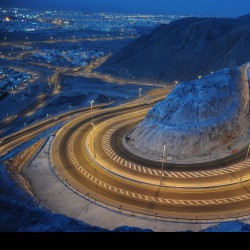
The Wilayat of Amerat, like all other wilayats of the governorate, has benefitted from the urban renaissance during the prosperous era and has witnessed significant population growth, thanks to modern urban planning and the availability of public services, which have encouraged many citizens to settle there. Amerat is rich in historical landmarks, including castles, fortresses, and towers. It is also well known for its mines of lead and lasif, as well as the Al Mogher area, which reflects its economic significance dating back to ancient times. The Wadi Sirin Reserve stands out as a historic, cultural, and tourist landmark because of its natural biodiversity. It is home to rare animals such as the Arabian tahr (Wa’al) and gazelles, along with a wide range of native plants and trees. The government has consistently prioritized the protection of this reserve, making it a valuable destination for both tourists and researchers. In addition, Amerat is notable for its agricultural activities, which have flourished due to the traditional aflaj irrigation systems that nourish the crops. The people of Amerat continue to practice various traditional crafts, preserving the wilayat’s rich cultural heritage.
Wilayat Quriyat
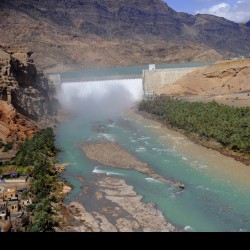
The Wilayat of Quriyat is one of the oldest wilayats in Oman, known for its unique geographical location and diverse terrain. It combines fertile plains, long stretches of coastline, towering mountains, and lush wadis where water flows throughout the day and night. Among the most renowned of these are Wadi Dayqah, Wadi Majlaas, Wadi Al Mesfah, and Wadi Al Arabeen. The wilayat is also home to ancient historical landmarks that reflect the achievements of human civilization across various eras. Notable landmarks include Quriyat Fortress, Al-Sahel Citadel, Al-Mazaree Fortress, Dagmur Fortress (also known as Dagh), and the Sira Tower, which is located offshore in the sea, along with other castles, forts, towers, and archaeological homes scattered throughout the villages of Quriyat. Additionally, Quriyat is distinguished by its breathtaking natural surroundings, such as Al-Salil Park and Ras Al Shajar Nature Reserve, which host a variety of rare animals, plants, trees, and birds. The wilayat also features several beautiful waterways and bays, including Khor Al Milh, Khor Al Khuwair, Khor Al Sahel, and Khor Al Khobar, each rich in marine biodiversity and natural beauty. One of Oman’s largest storage dams, the Wadi Dayqah Dam, is also located in Quriyat. It attracts visitors from all over who come to enjoy the stunning scenery and the dam’s striking architectural presence, which adds to the area’s charm and prestige. Quriyat is also renowned for its agricultural heritage, with a wide variety of trees and crops, particularly mangoes and date palms, thriving thanks to its fertile springs and traditional falaj irrigation systems. The wilayat is equally rich in marine resources, and its people continue to preserve a legacy of traditional crafts and authentic Omani arts.


Traditional Crafts
In spite of the development and progress achieved by Omani society in all aspects of life, the preservation of the Omani heritage is a fundamental pillar of the modern state and a distinctive feature of the Omani society. Heritage is an essential element in the formation of national identity. Despite the tremendous development of tools and means of production. Omani crafts include: Ship (Dhow) Building Oman's connection with the sea stretches back many centuries when Omani sailors using mast and sail, pioneered sea routes to the cities of the ancient world. Favorable factors were Oman's position at the crossroads of shipping routes which linked the Arabian Gulf to India, the Red Sea and East Africa and her knowledge of shipbuilding. Oman became the first non-European country to extend its influence to Africa where it remained for hundreds of years, due mainly to her ships/dhows. Oman was an important maritime and political power who established relations with China, Great Britain, France, the Netherlands and the United States of America. Throughout its long history, Oman's navy has played a key role in the country's economic success, both in providing the instrument for internal and external trade and in underpinning fishing and pearling activities. The Omani warship "The Sultana" which anchored in New York harbour in 1840, bearing gifts from Sultan Said bin Sultan to the American President, was a symbol of the greatness of the Omani fleet at that time. In Oman two techniques are used in shipbuilding. In the first, timbers are laid side-by-side and pierced at intervals with a fine hand drill. The timbers are then bound together through these holes by means of rope made of coconut fibre and the holes covered with a mixture of fibre or raw cotton soaked in fish, coconut or sesame oil. Arab geographers such as Al Idrissi and Ibn Jubair believed that boats bound with fibres and with flat hulls were safer than those fitted together with rigid iron nails because if they ran onto rocks or came into contact with another hull, they were more flexible. In the second method, nails are used and in essence this is the same technique as used in other countries of the Arabian Gulf and Red Sea. The main type of wood used for the hull and keel is teak which is imported from India. The ribs are made from locally available woods such as qart, sidr and sarar. The tools used in a ship's construction are simple and basic such as the hammer, saw, awl, bow drill, chisel, plane and calking iron. The principal shipbuilding yards in Oman were Sur, Mutrah and Shinas. Omani ships, which can last for 60-100 years, are distinguished by their variety of types although some are no longer made. The largest type was the ocean-going cargo vessel, the baghlah with a length of 135 feet and a load capacity of 150-400 tonnes which could be distinguished by its high poop deck and quarter galleries, its transom stern being pierced by five window apertures and often elaborately carved. The ghanjail was very similar to the baghlah, and is considered by many Omanis to be the most beautiful of the large dhows.The sambuuq used to be one of the most commonly seen Arab vessels: its distinguishing features are the low, curved, scimitar-shaped stem piece and high square stern which lacks a quarter gallery. The word sambuaq used to denote the sewn boats of the Dhofari coast, and may therefore be a term of great antiquity. The government is keen to encourage the maritime tourist industry, in restoring old ships, increasing the use of large vessels/dhows for sea fishing, and also the building of small models of Omani ships for decorative purposes and for i participating in exhibitions. HALWA Omani halwa (sweet) is famous at home and abroad as a symbol of traditional Omani hospitality. It is usually served in Omani homes before drinking Arabic coffee. The main ingredients which go into the making of halwa are: starch, eggs, sugar, water, ghee, saffron, cardamom, nuts and rose water from the Jebel al Akdhar. The ingredients are mixed, in proportions and quantities known only to the skilled halwamaker, and cooked in a mirjnl (large cooking pot used especially for halwa) for a time of not less than 2 hours. The cooking can be done over a gas or electric stove, but the preferred method is over a wood fire made up of snmr wood, known for its durability, smoke and odourfree properties. After cooking, the halwa can be preserved for more than four months without losing its quality, and without the need for refrigeration or preserving agents. Halwa is usually served in a dist, a large earthenware bowl, which can vary in size and composition according to demand or type of occasion. The list can also be made of metal or plastic. Halwa is invariably served at times of joy or sorrow and, on religious occasions and festivals. It graces the tables of every Omani home. Palm leave products The Palm leave products depends on palm trees. There are Al Khaws (palm leaves), the Zawr (palm branches stripped of their leaves), the palm trunk and the fibre. For example, mats(rugs) are made of the two plants called Al Ghadf and Al Rusul which grow on the valley banks where there is an abundance of water. Governorate of Musandamis renowned for its palm leaf industries, such as utensils (Al Surood and Al Makba) which are made from palm leaves. Al Surood is a mat-shaped tray known as Sama, used with food to protect it from insects, while Al Makba fulfils the same purpose. Daggers and Swords A normal or hooked dagger is the most important component of the Omani dress. Omanis are keen to acquire daggers and appear wearing them at official events, national celebrations and weddings. Due to the succession of this social custom from one generation to another, the dagger-making industry has survived the passage of time, albeit with modern improvements. The Omani dagger is an authentic heritage the present generation is keen to pass on to their children. The dagger is also a symbol of manhood and pride among Omani men, who wear it on their leather belts over the dishdashah (long outer garment). Its front section is made of small connected silver pieces, or it may be elegantly embroidered with silver or gold threads. A dagger’s price is determined by the raw material it is made of, usually iron, silver or gold. Although silver daggers are the most common, especially for making the dagger handle, the blade case too determines a dagger’s price. There is the giraffe case, which is the most expensive because it has been banned, and cases made of buffalo skin, sandalwood, and the bitter orange tree. Silver wares The silver industry occupies a key place in the history of Oman. Omani silver jewellery is characterised by a rich sense of the aesthetic and reflects the unique taste of the country’s authentic art, deeply rooted in its history. Silver in Omani society is reflective of its rich social and religious symbols. The Omani dress, whether that of women or men, is never complete without silver jewellery that adds to its beauty, especially apparent in the Omani khanjar (dagger). The Pottery The art of pottery-making is an inherent and distinct testimony to the world’s civilisations as it reflects the extent of their development and advancement. Though pottery-making is one of the simplest forms of art because of its primitive nature, it is in fact, one of the most difficult trades because it involves a form of art. Pottery-making in Oman is considered an ancient industry. The reason it has attracted much interest can be attributed to the multitude of its uses in Omanis’ daily lives. Bahla in A'Dhahirah Governorate is the most famous town for pottery-making in Oman. Pottery is of many kinds and shapes, and its uses and manufacturing materials vary. The pots known as jihal are used for keeping water, the red pots with a thick layer known as khuroos are used for keeping water and dates, the small ones are for keeping honey and grease and the pots known as brams are used as cooking utensils. Pottery is also made as coffee pots and thermoses. Clay is the main component of Pottery and is widely available in Bahla in A'Dhahirah Governorate, where the soil is rich in clay.